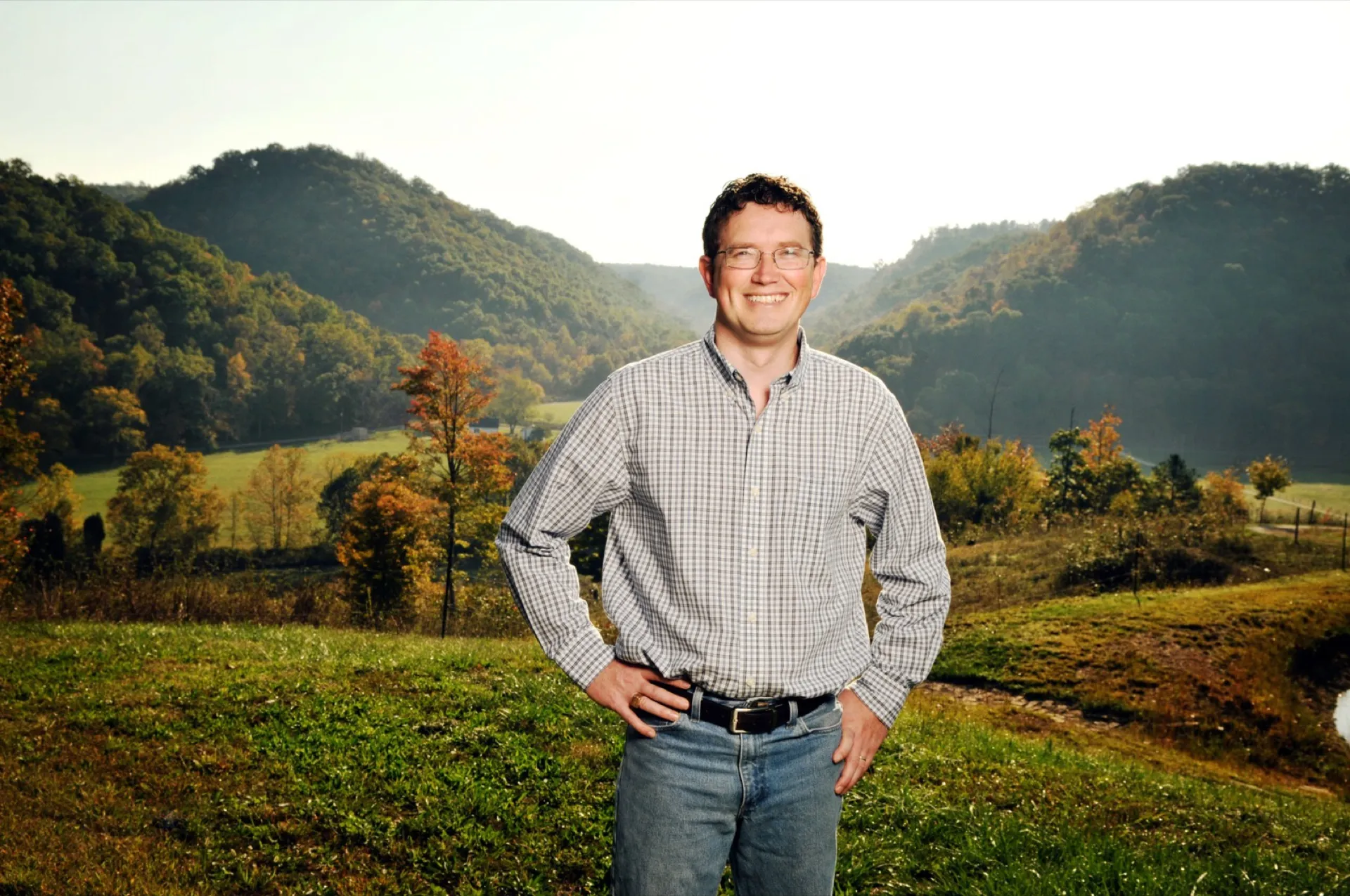
Lewis County, Kentucky
Who Is
Thomas Massie?
This is not the story they told you.
This is the real one.
Begin
Lewis County, Kentucky
This is not the story they told you.
This is the real one.
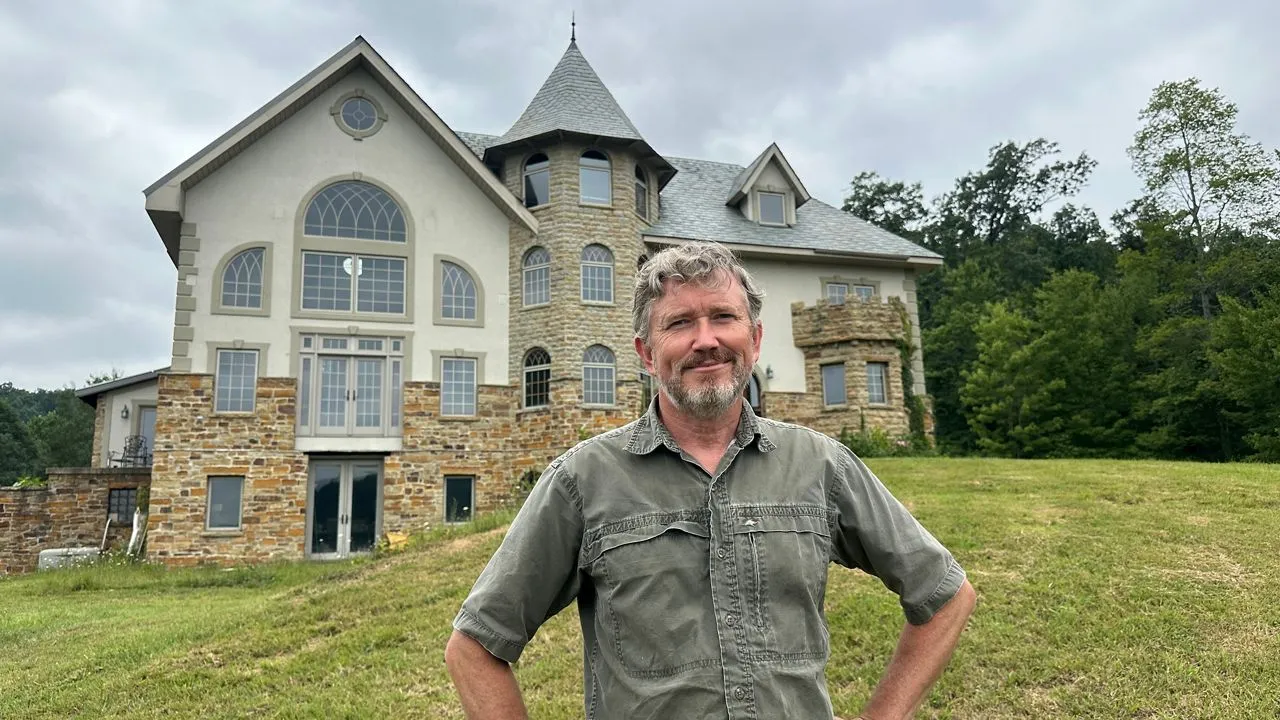
The homestead – Garrison, Lewis County, Kentucky. Built by hand from materials harvested on the property.
There is a house in the hills of eastern Kentucky, down a gravel road that most GPS systems don't know about, on a thousand acres of land that has been in the same family for generations.
The house is a timber-frame structure – over 4,400 square feet – built almost entirely from materials harvested on the property. The oak and poplar were milled from trees felled by an ice storm. The stone in the fireplace and the wood-fired pizza oven was quarried from the hillside out back. More than ninety-five percent of the building came from the land beneath it. The whole frame is held together with hand-cut joinery. Four metal fasteners. In the entire house.
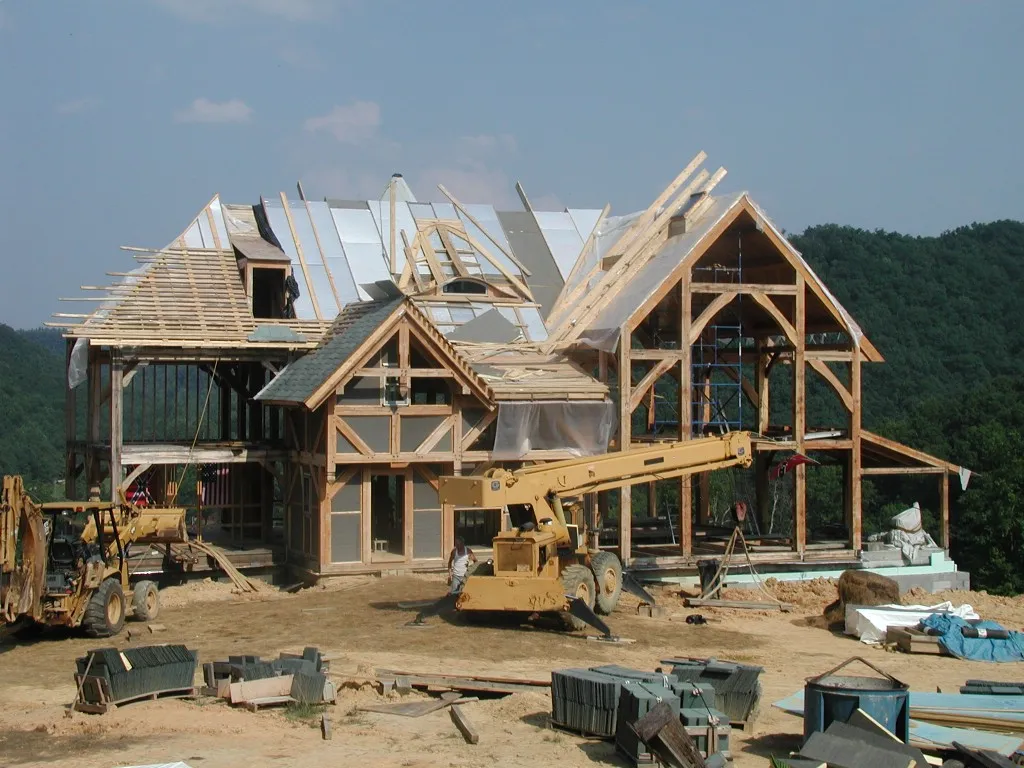
The frame going up. Timber milled from trees felled by an ice storm on the property.
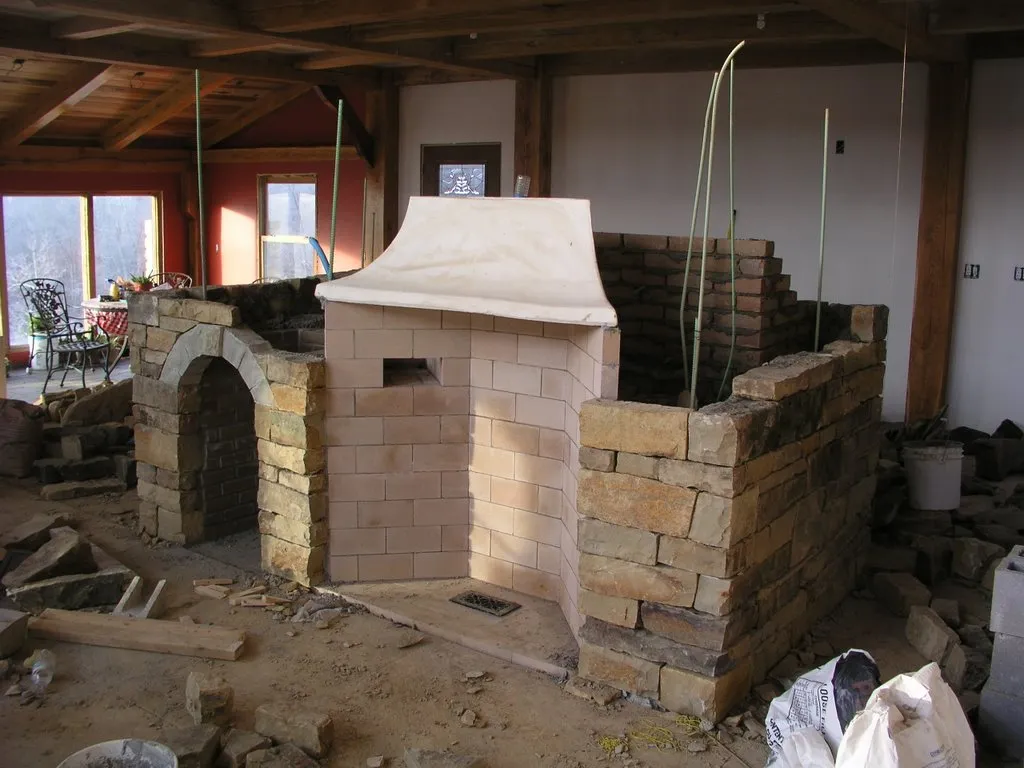
The fireplace, mid-build. Stone quarried from the hillside. Timber beams overhead.
It runs on solar panels. The batteries are salvaged Tesla packs that the owner drove twenty hours to Georgia to pick up from a wreck. The water comes from a well he dug by hand with a neighbor – not drilled, dug. In winter, a wood-gasification system heats the radiant floors. In summer, waste heat from a geothermal loop makes the hot water. There is propane as backup, but it doesn't get used much.
The man who designed these systems, who drew the joinery, who taught himself timber framing from books and then cut every joint – he also holds twenty-nine patents, two degrees from MIT, and a seat in the United States Congress.
His name is Thomas Massie. And this house tells you more about him than any vote ever will.
"Geek, hillbilly, and redneck."
He wore all three as badges of honor.
Thomas Harold Massie was born on January 13, 1971, in Huntington, West Virginia, and grew up in Vanceburg, a small town in Lewis County, Kentucky, on the Ohio River. Population around 1,500. The kind of place where everybody knows your truck before they know your name.
From the time he could hold a screwdriver, he was taking things apart. Not to break them. To understand them. Then he'd put them back together – usually better than before. He built robots from household items. He built an automatic plant-watering device. He built a hand-weaving machine patterned after an Andean design. In middle school and high school, he was building robot arms and telling people, completely seriously, that he was going to make a robot to clean his room.
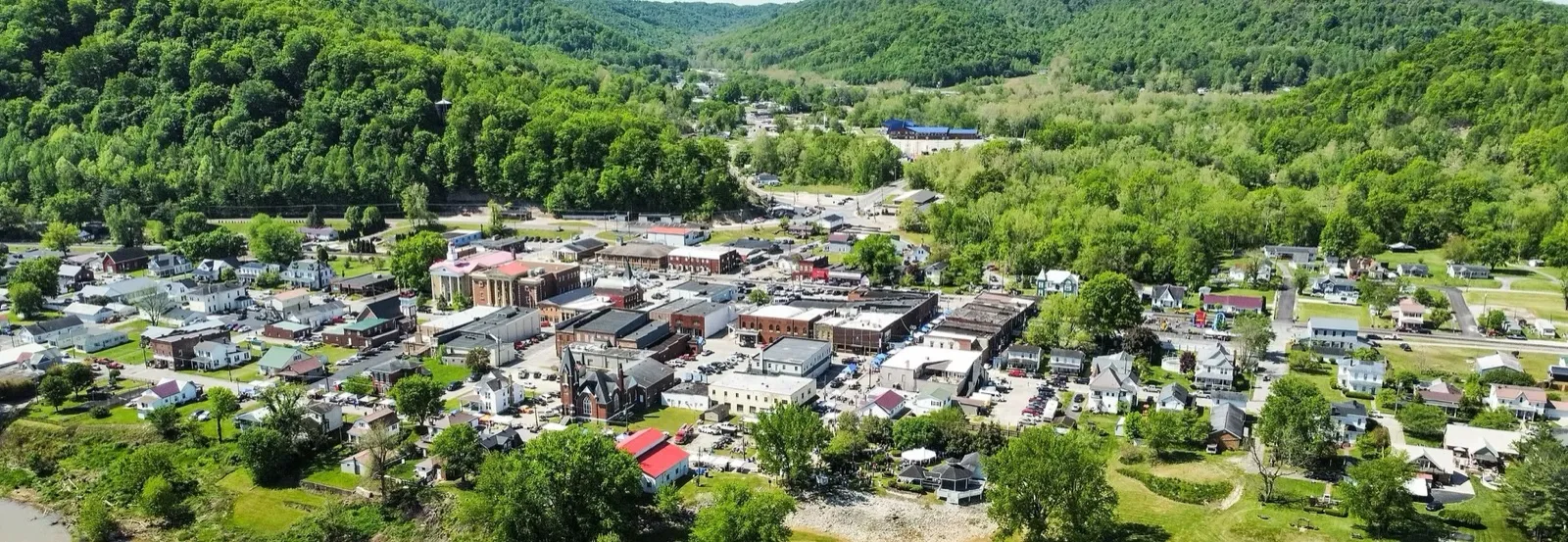
Vanceburg, Kentucky – population around 1,500. Where it all started.
In 1989, the kid from Vanceburg left for the Massachusetts Institute of Technology. It would have been easy to never come back. Almost nobody does. But that's getting ahead of the story.
At MIT, Massie didn't slow down. He helped build and drive the school's solar race car in the 1990 Sunrayce. He entered the university's famous design-and-build competition – a brutal, hands-on engineering contest – and won. Beat roughly 250 mechanical engineering students. He later recalled it with the directness that would become his signature: "I won the contest. I beat 250 mechanical engineers."
Then he built something that changed a field.
For his senior project, Massie created a device called the PHANTOM – a force-feedback interface that let users physically feel virtual objects through a computer. You could reach into a digital space and touch something that wasn't there, and your hand would feel resistance, texture, shape. It was the first practical haptic interface, and it moved computing beyond screens and keyboards into the domain of human touch.
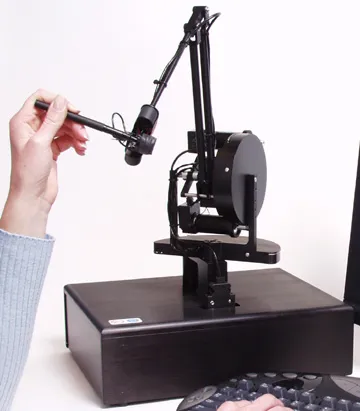
The PHANTOM – a device that let you touch what wasn't there. Built as a senior project. It launched a company and a field.
He earned his bachelor's in electrical engineering in 1993 and his master's in mechanical engineering in 1996. His thesis was titled "Initial haptic explorations with the phantom: virtual touch through point interaction." In 1995, he won the first-ever Lemelson-MIT Student Prize – thirty thousand dollars and national recognition as one of the most promising young inventors in America.
He and Rhonda – his high school sweetheart, who had followed him to MIT and was earning her own engineering degree – co-founded a company called SensAble Technologies while they were still students. They turned the PHANTOM into a commercial platform. Venture capital came in. The company grew to seventy employees. The Smithsonian took notice. The devices found their way into surgical training, industrial design, and research labs around the world.
By his early thirties, Thomas Massie had twenty-nine patents, a successful tech company, and every reason to stay in Boston.
In 2003, the Massies sold SensAble Technologies. They could have done anything. Stayed in Cambridge. Moved to Silicon Valley. Joined the circuit of serial entrepreneurs and angel investors who lunch in Palo Alto and summer on the Vineyard.
They went home.
Back to Lewis County. Back to the family land. Back to the gravel road.
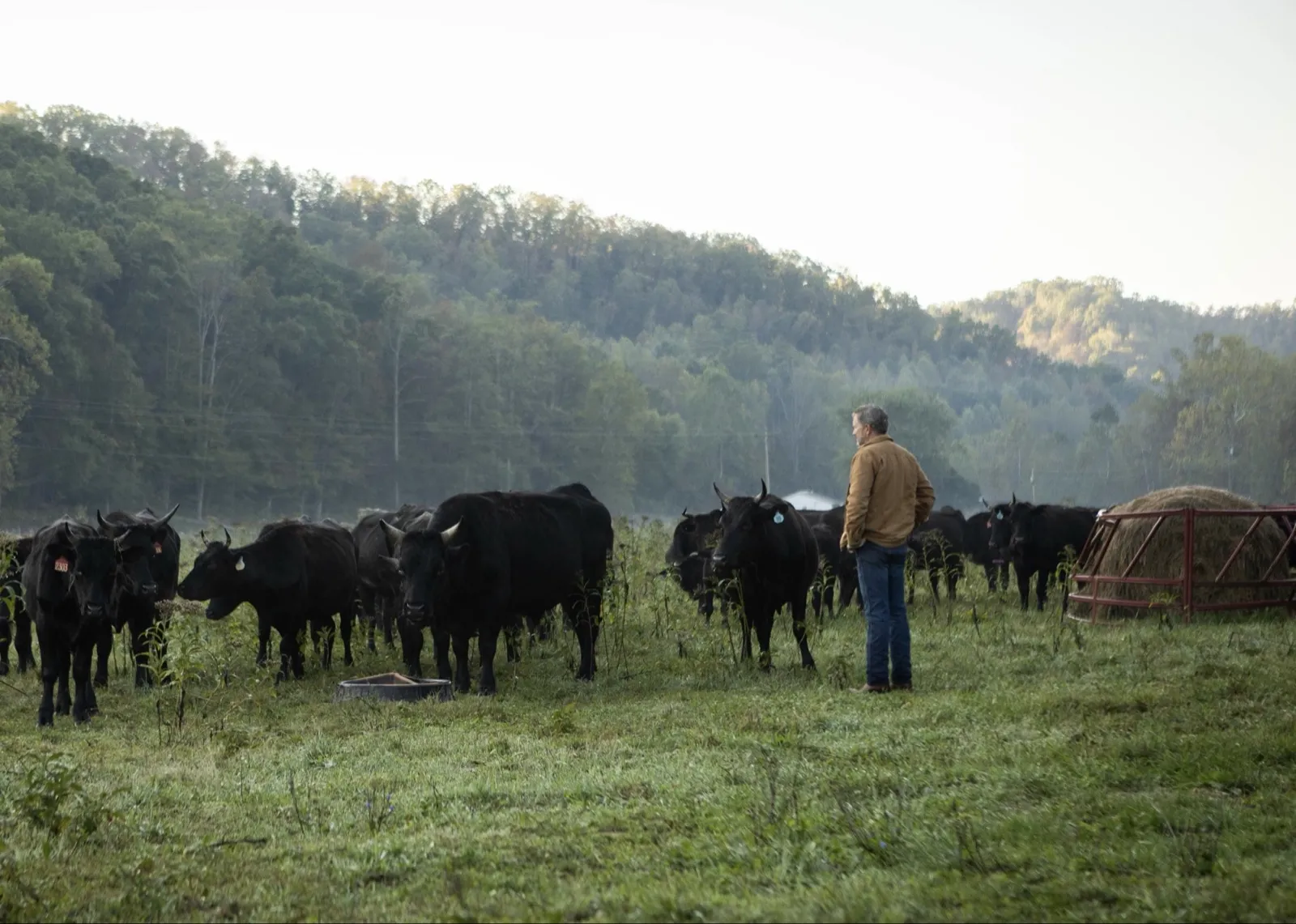
Morning on the farm. The Massies chose this over Boston.
They started building. Not a weekend cabin. A life. They taught themselves timber framing from books and workshops. When a brutal ice storm in 2003 and 2004 flattened trees across the property, they didn't call someone to clear the mess. They milled the fallen timber into lumber and used it for the frame of their house. Setbacks became raw material. That's how they worked.
They raised cattle. Kept ducks and chickens in mobile tractors. Grew food in gardens and orchards – peaches, vegetables, year after year. They planted a walipini, an underground greenhouse. Thomas and Rhonda had kept a garden beside a parking lot while they were newlyweds at MIT. The homestead wasn't a midlife reinvention. It was the life they'd always wanted, just at full scale.
And they raised four children on that land – Justin, Mason, Sarah, and Elizabeth – the kind of childhood where you learn that dinner and daylight are both earned.

The Massie family at home. Thomas, Rhonda, and their four children – Justin, Mason, Sarah, and Elizabeth.
Thomas Massie did not grow up wanting to be a politician. He grew up wanting to build things. Politics found him the way it finds a lot of people who'd rather be left alone – it came to his door and wouldn't leave.
It started with a local tax fight. The details were small and municipal and exactly the kind of thing that most people ignore. Massie didn't ignore it. He wrote letters. He showed up. He made arguments based on math, not feelings. And he discovered something that would redirect the rest of his life: the people running the system often didn't understand the system.
In 2010, he ran for Lewis County Judge Executive and won. It was a county office – budgets, roads, facilities. The kind of job where nobody expects much. Massie treated it the way he treated everything else: as an engineering problem. When the county jail's water heater broke, he went over and replaced it himself. A former jailer named Chris McCane watched him do it and said, simply, "This is a different fella right here."
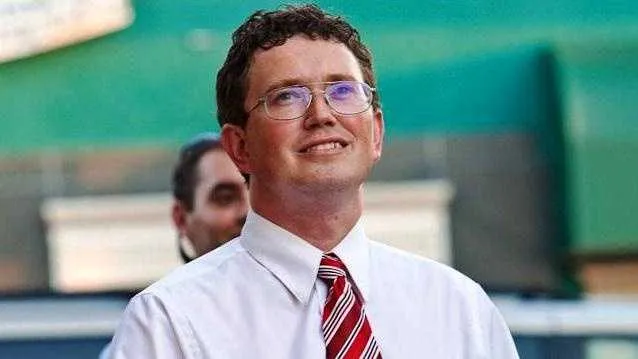
The early days – before Congress, before the gray in the beard.
In 2012, Massie won a crowded seven-way Republican primary for Kentucky's 4th Congressional District – a sprawling seat along 261 miles of the Ohio River. Rand Paul, his Kentucky ally, called him "one of the best folks we have up there." A Roll Call profile described the new congressman as an "earnestly wonkish scientist and charismatic schmoozer" – a combination nobody had seen before and hasn't seen since.
He went to Washington. He has won every election since, often by enormous margins. But the winning was never the point.
"I came here this week to make sure our Republic doesn't die in an empty chamber by unanimous consent."
– March 27, 2020, objecting to the $2.2 trillion CARES Act
The press calls him "Mr. No." His colleagues call him a budget hawk. His critics call him a grandstander. None of these descriptions are quite right, and none of them are quite wrong.
What Thomas Massie does in Congress is simple to describe and almost impossible for most politicians to do: he votes the same way whether the cameras are on or off. Whether his party agrees or not. Whether the president is pressuring him or praising him. Every single time.
He opposes spending bills that add to the debt – from either party. He opposes surveillance expansions, even when they're wrapped in national-security language. He opposes foreign aid packages when the country is borrowing to fund them. He opposes symbolic resolutions when he believes they shade into compelled speech. He co-sponsored criminal justice reform with a Democrat. He fought to protect patent rights for small inventors, because he is one.
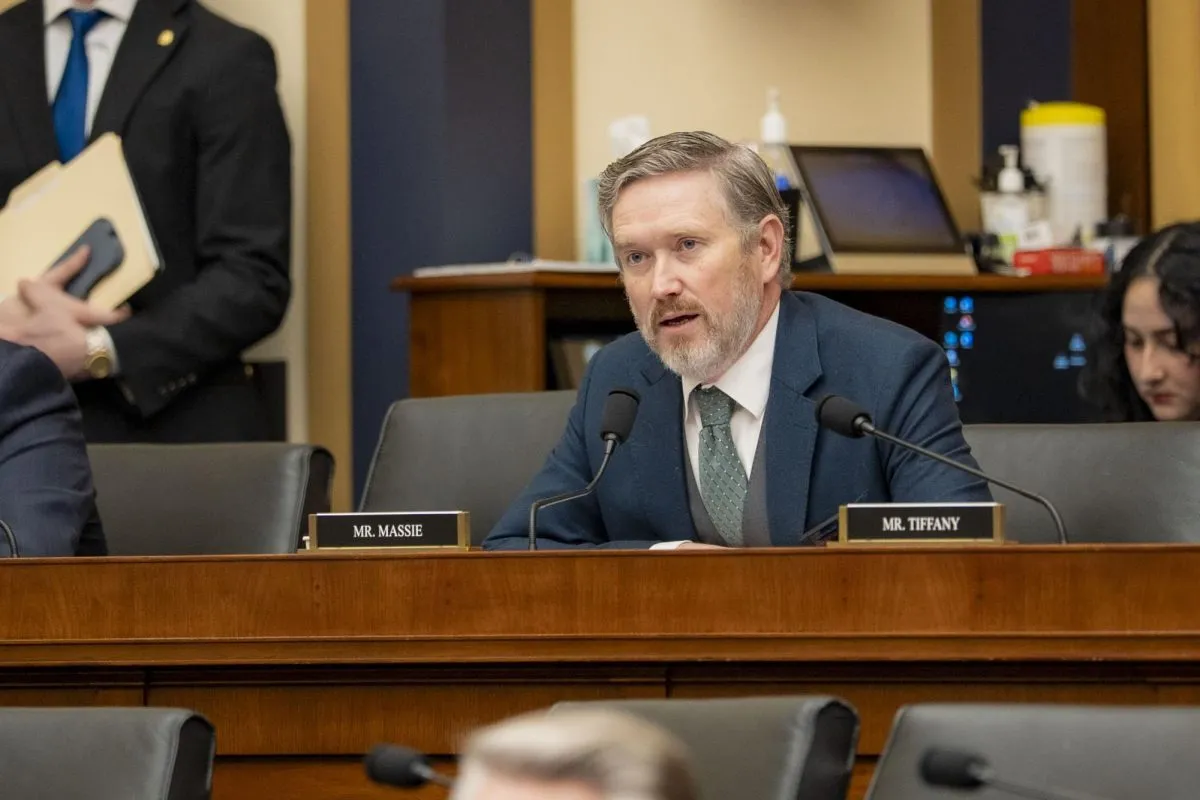
House Judiciary Committee. The nameplate reads MR. MASSIE.
In March 2020, when Congress tried to pass a $2.2 trillion emergency spending bill by voice vote in a near-empty chamber, Massie objected. He didn't object to helping people. He objected to the process – to the idea that the largest spending bill in American history could pass without anyone going on record. He forced members to return to Washington. The president attacked him by name. Both parties were furious.
In May 2022, the House voted 420 to 1 on a resolution condemning antisemitism. Massie was the one. Not because he supports antisemitism – he doesn't – but because he believed the resolution promoted internet censorship and that Congress has no business policing speech. He explained his vote publicly. He did not flinch.
This is the pattern. Not obstruction for its own sake. A consistent, engineer's insistence on first principles: Does Congress have the authority? Does the math work? Does the process respect the Constitution? If the answer to any of those is no, Thomas Massie votes no, and he votes no alone if he has to.
"I'd rather be right than be in the majority."
The same stubbornness that built a house from trees knocked down by a storm is the same stubbornness that casts the lone vote in a 420-to-1 chamber. It is not two different things. It is the same man.
Founded the Congressional Second Amendment Caucus. Repeatedly introduced the Safe Students Act to repeal the Gun-Free School Zones Act.
Championed Federal Reserve transparency and introduced legislation to abolish the Fed entirely. Sound money, not managed decline.
Introduced a constitutional amendment to protect the right to grow food and buy from local sources. The farmer-congressman.
Co-authored the Surveillance State Repeal Act and the Secure Data Act. No backdoors. No warrantless searches. Period.
To understand Thomas Massie, you have to understand Rhonda.
Rhonda Kay Howard met Thomas at Lewis County High School. She was his prom date, his high school sweetheart, and eventually his classmate at MIT, where she earned her own engineering degree. They married on August 28, 1993, at a Methodist church in Vanceburg. She was twenty-two. He was twenty-two. They had been building things together since they were teenagers, and they never stopped.
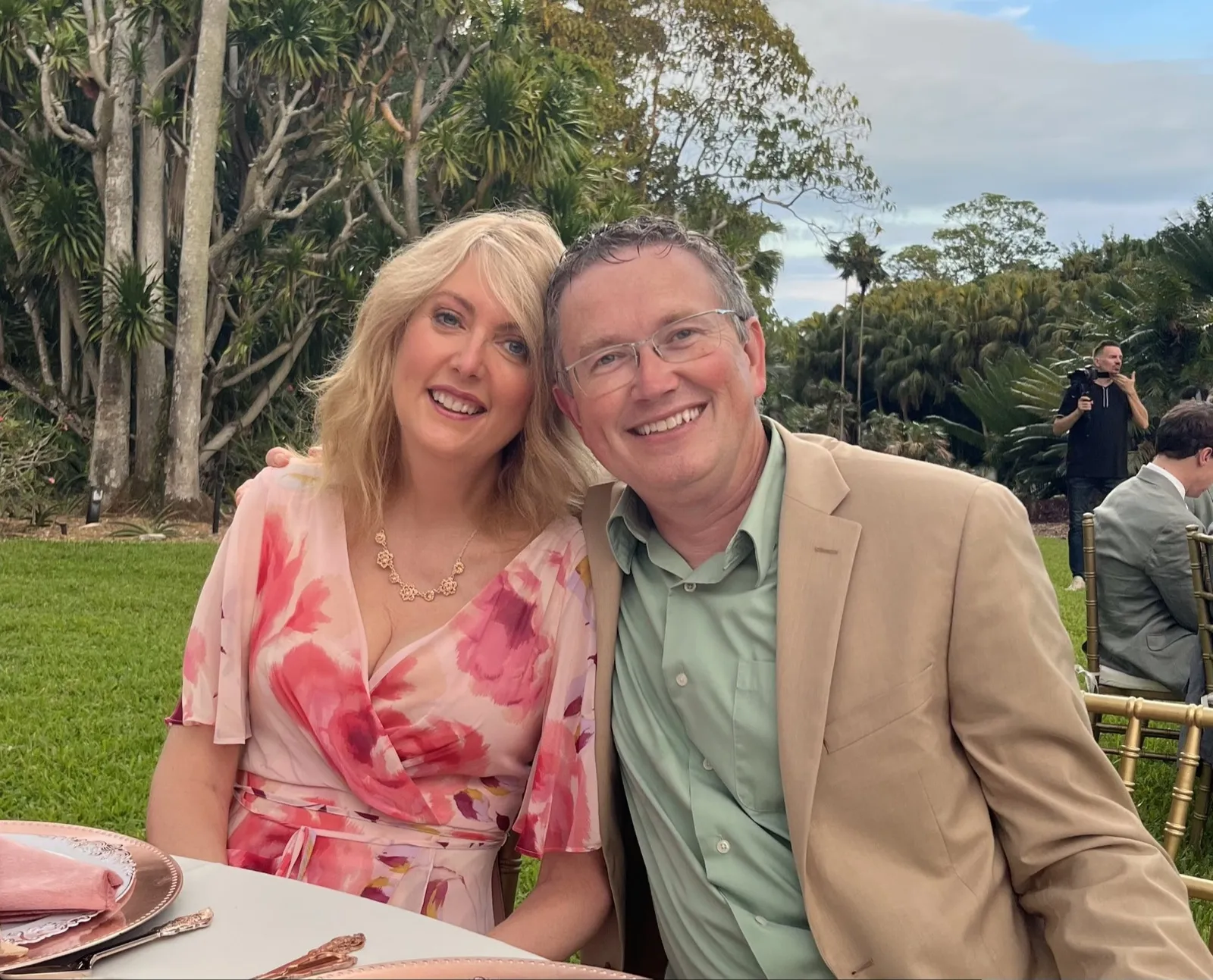
Thomas and Rhonda. High school sweethearts. MIT classmates. Business partners. Thirty years.
She co-founded SensAble Technologies with him. She helped raise over thirty million dollars in venture capital and build a company of seventy people. When they sold it and moved home, she was the one beside him learning timber framing from books, milling ice-storm lumber, laying stone, designing off-grid energy systems. They kept a garden by a parking lot at MIT when they were newlyweds and they grew food every year of their marriage. She helped re-establish the ducks and chickens. She raised four children on a farm at the end of a gravel road in a house they built with their own hands.
Rhonda Massie was not a political spouse. She was an engineer, a farmer, a co-builder in every sense. When Thomas went to Congress, it was their homestead he was defending. Their way of life. Their bet on independence.
For over thirty years, every chapter of his story was also hers.
On June 27, 2024, Rhonda Massie died suddenly.
Thomas called her the love of his life.
There is no politics in a sentence like that. There is no left or right. There is only a man who built his entire world alongside one person, and then she was gone.
He had been married for thirty years. His children had grown up on land their parents cleared and built on together. The house Rhonda helped design still stands in the Kentucky hills, running on the systems they engineered together, framed with timber they milled together, on ground they chose together when they could have chosen anywhere.
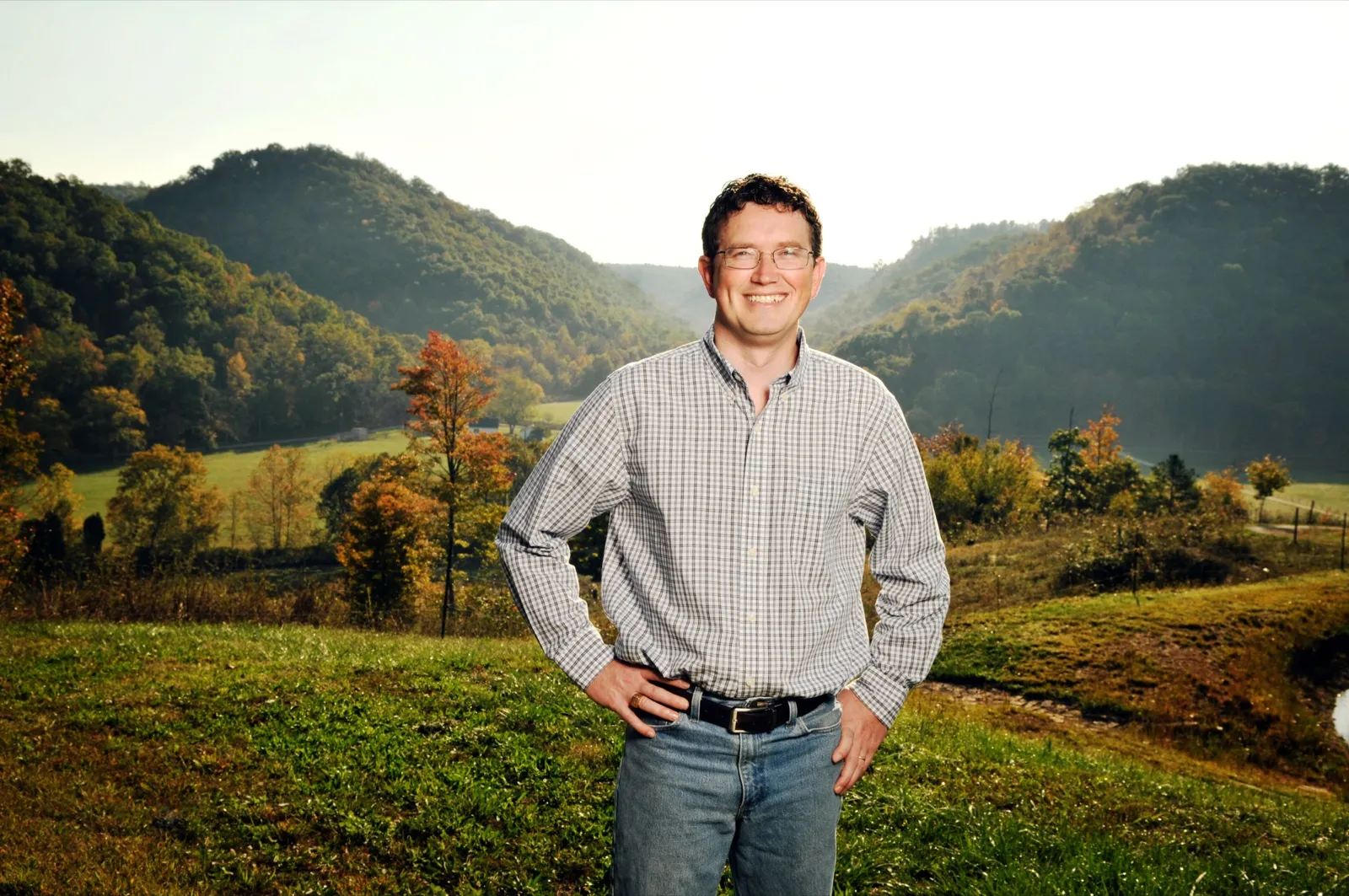
Still on the farm. Still in the hills.
Some losses are so large they rewrite everything that came before. But Massie didn't disappear. He kept going. The farm kept running. The votes kept coming. The man who builds things kept building.
In October 2025, Thomas Massie married Carolyn Grace Moffa – a woman he had known for over a decade, first met professionally when she worked as an agriculture policy staffer for Rand Paul. Their first date was at the Library of Congress. He proposed on its steps. They married legally in Kentucky and held a ceremony in her home state of Pennsylvania. A new chapter. Not a replacement. A continuation.
In 2026, he faces one of the most politically charged races of his career – a Trump-backed primary challenger, a test of whether his district values the independence they've been voting for since 2012. Party leadership wants him gone. He is not going anywhere.
"I'm going to hang in here like a hair in a biscuit."
That's Thomas Massie. The boy who built robots from appliance parts. The engineer who let you touch what wasn't there. The man who sold a tech company and went home to build a house from fallen trees. The congressman who votes alone in a chamber of 435 and sleeps fine.
He is still on the farm. Still in the hills. Still building.
YOUR TURN
Join the movement to draft Thomas Massie for President.
Join the Draft →The hills of eastern Kentucky have a way of shaping a person. The land demands honesty. The seasons don't negotiate. And the people there know the difference between talk and work.